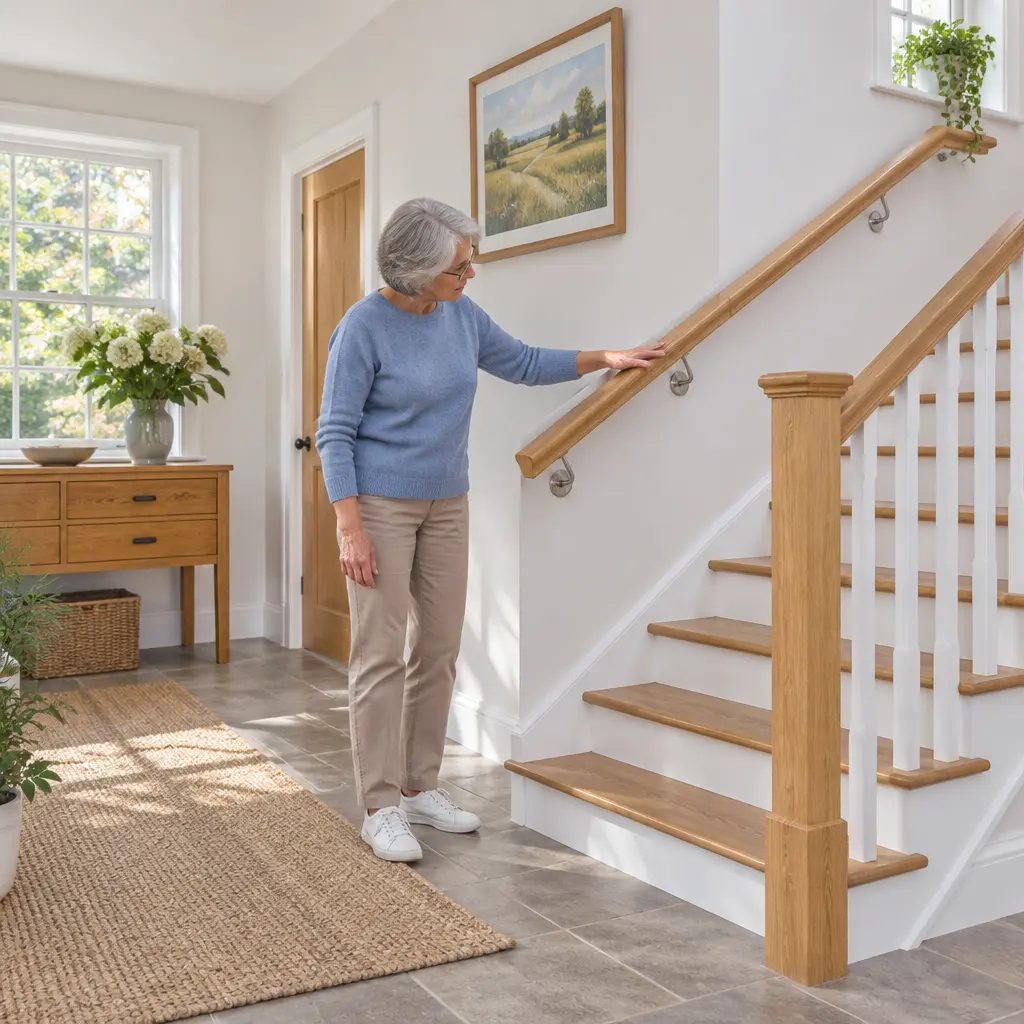
Home modifications are changes to a dwelling that make everyday activities safer, easier, or more accessible. The best way to prioritize them is not by price alone, but by the severity and likelihood of harm they can prevent, the resident’s needs, and how often the risk occurs. Falls make this approach especially important: the U.S. Centers for Disease Control and Prevention (CDC) reports that more than one in four adults aged 65 and older falls each year, and falls are a leading cause of injury in that age group. A practical safety-first plan starts with urgent hazards such as unsafe stairs and missing bathroom supports, then addresses lighting, access, and daily-use needs—while considering professional assessment, available assistance, and the resident’s preferences.
Prioritizing Home Modifications by Safety Impact
A safety-impact priority is a way to rank home changes according to the harm they may prevent, rather than treating the cheapest or most visible repair as automatically first. The National Institute on Aging recommends steps such as removing trip hazards, improving lighting, and installing grab bars; the CDC’s STEADI initiative similarly emphasizes identifying fall risks and taking practical steps to reduce them. These recommendations support a tailored approach: first reduce immediate threats, then improve the routes and rooms the person uses most, and finally plan wider accessibility upgrades.
A useful assessment considers four factors: potential severity of injury, likelihood of exposure, the resident’s functional abilities and health, and how often the space or feature is used. This is a planning framework, not a validated clinical scoring tool. A loose stair rail may warrant urgent attention for someone who uses the stairs daily, while a costly entrance ramp may be the more urgent need for someone who cannot safely enter or leave the home. An occupational therapist or qualified home-modification professional can help assess individual risks.
Immediate hazards and high-consequence risks
Immediate hazards are conditions that could cause serious harm during routine movement or emergency use. Examples include unstable handrails, steep or poorly lit stairs, slippery bathing surfaces, obstructed exits, and flooring transitions that catch a walker or foot. Give these hazards priority when they affect a frequently used route or when the resident has impaired balance, vision, strength, or mobility. Correcting a specific hazard can be more protective than purchasing general equipment that does not address the underlying risk.
The CDC reports that falls result in millions of emergency-department visits among older adults annually. That population-level evidence does not predict an individual’s risk, but it underscores why severe fall hazards merit attention. Where a danger cannot be repaired immediately, reduce exposure—for example, use an alternate route, improve temporary lighting, or arrange assistance—until a lasting fix is in place.
Risk, exposure, and resident-specific need
Risk depends on more than the physical feature itself. A step may pose little difficulty to one resident and a major barrier to another; medication effects, recent falls, changing vision, and use of a cane or wheelchair can alter what matters most. The World Health Organization describes falls as events influenced by interacting personal and environmental factors, supporting assessments that consider both the person and the home.
Exposure matters too: a hazard on the route to the bathroom may be encountered several times each day, while a rarely used storage area may present less immediate risk. Ask the resident which tasks feel unsafe, observe how they move through the home, and revisit priorities when health or household circumstances change.
Bathroom Modifications That Reduce Fall Exposure
Bathroom modifications address risks created by wet surfaces, transfers, and limited maneuvering space. Because bathing and toileting often require changes in posture and support, this room can deserve early attention when a resident reports slipping, difficulty standing, or trouble getting in and out of the tub. The right change depends on the person’s abilities and the bathroom layout; a generic fixture is not a substitute for proper placement and secure installation.
Grab bars and secure supports
Grab bars are fixed supports designed to help a person steady themselves or complete a transfer. Properly positioned, securely anchored bars near a toilet or bathing area can provide a reliable handhold. They should be installed into appropriate structural backing or with a system rated for the wall and intended use; towel bars are not designed to bear a person’s weight. A professional can help determine placement based on the resident’s reach, balance, and movement pattern.
Safer bathing and toilet transfers
Safer bathing may involve a nonslip surface, a shower chair, a handheld showerhead, or a walk-in shower, depending on the person’s needs. A raised toilet seat or toilet-area support may make sitting and standing easier for someone with limited strength or joint movement. These options have different installation requirements and do not eliminate all risk. In particular, a shower chair must be stable and sized for the space, and transfer arrangements should not block access or create new tripping obstacles.
For some households, replacing a tub with a step-free shower is a larger project, but its value should be judged against the resident’s actual difficulty and frequency of use—not cost in isolation. A small, well-targeted support can be more urgent than a full renovation, while a resident who can no longer enter the tub safely may need a more substantial adaptation.
Stairways, Entrances, and Movement Routes
Stairs, entrances, and narrow routes connect the rooms where daily life happens. Prioritizing these areas means looking for hazards along the complete journey: from the bedroom to the bathroom, from the living space to the kitchen, and from the home to the outside. A modification is most useful when it addresses the actual route and remains usable for the resident and anyone assisting them.
Handrails, stair visibility, and safe steps
A secure handrail gives support while ascending or descending stairs. Check that rails are firmly attached, continuous where practical, and easy to grasp; repair loose steps and improve lighting so the edges of stairs are visible. Contrast markings can help some people distinguish step boundaries, but they should be placed consistently and should not create a raised edge. If stairs are no longer manageable, consider whether essential activities can be moved to one level or whether a professionally assessed lift or alternative route is appropriate.
Entrances, ramps, and clear routes
An accessible entrance allows a resident to enter and leave the home with less risk and greater independence. Depending on the site, options may include repairing uneven paths, adding a rail, improving a threshold, or installing a ramp. Ramp design must account for slope, landings, surface, drainage, and available space; an improvised steep ramp can create a serious hazard. The U.S. Access Board’s accessibility guidance provides technical criteria for accessible routes, while a qualified local professional can assess how those standards apply to a private residence.
Inside, keep frequently used paths clear and wide enough for the resident’s mobility aid. Secure or remove loose rugs, manage cords, and check transitions between floor surfaces. These low-cost actions can be completed quickly, but they should not distract from higher-consequence needs such as an unsafe stairway or inaccessible exit.
Lighting, Flooring, and Everyday Safety
Environmental improvements can reduce hazards across multiple rooms. Lighting helps people detect obstacles and judge changes in level; flooring and household organization affect whether feet or mobility aids catch, slide, or lose traction. Their priority rises when the resident has low vision, walks at night, or frequently travels through a particular area.
Lighting and visibility
Effective lighting provides enough illumination to see obstacles without creating glare or deep shadows. Consider brighter, evenly distributed lights in stairways, entrances, kitchens, and bathrooms, as well as switches that are easy to reach. Motion-activated or bedside lighting can help illuminate night-time routes, but devices should be positioned to avoid glare and confusing shadows. The National Institute on Aging includes better lighting among its home-safety recommendations for older adults.
Flooring, rugs, and clutter
Safer walking surfaces are stable, level, and appropriate for the resident’s footwear or mobility aid. Remove loose rugs or secure them with suitable non-slip backing, keep floors dry, and avoid leaving objects in pathways. Flooring changes may help when a surface is persistently slippery or uneven, but replacing an entire floor is not automatically the best first step. Target the location and condition associated with the resident’s actual difficulty.
A Practical Method for Choosing What Comes First
A structured process turns safety concerns into a manageable plan. It also prevents cost from becoming the sole decision rule: an inexpensive modification may be insufficient for a major access barrier, while a costly renovation may be unnecessary if a targeted repair addresses the risk.
- Identify recent falls, near-falls, painful transfers, and tasks the resident avoids or completes with difficulty.
- Walk through the home with the resident and note hazards on frequently used routes, including night-time routes and exits.
- Rank each concern by possible severity, likelihood of exposure, frequency of use, and the resident’s current abilities.
- Address urgent hazards first, using a temporary risk-reduction measure if a permanent repair will take time.
- Consult an occupational therapist, clinician, contractor, or accessibility specialist when the change involves transfers, structural work, ramps, or equipment selection.
- Review the result with the resident after installation and adjust if the change is difficult to use or creates a new obstacle.
Funding can affect timing, but it should not erase safety priorities. The U.S. Department of Housing and Urban Development’s Older Adult Home Modification Program supports eligible organizations that provide home-modification services to older adults with low incomes. Local aging agencies, Medicaid home- and community-based services, veterans’ programs, and nonprofit organizations may offer other assistance, subject to eligibility and location.
Conclusion: Put the Highest Safety Need First
Home modifications are most effective when selected around the resident’s real risks and routines. Prioritize severe hazards and frequently used routes, then consider bathroom supports, stair and entrance access, lighting, flooring, and broader accessibility needs. CDC fall data and guidance from the National Institute on Aging reinforce the importance of prevention, while individual assessment determines which change is most urgent in a particular home.
Start by asking the resident what feels unsafe, checking the routes they use every day, and arranging professional advice for complex changes. Then make a written, safety-ranked plan and investigate local assistance. A thoughtful sequence can protect independence and reduce avoidable risk more effectively than choosing modifications by price alone.
Sources: Centers for Disease Control and Prevention, Facts About Falls, https://www.cdc.gov/falls/data-research/facts-stats/; Centers for Disease Control and Prevention, STEADI—Older Adult Fall Prevention, https://www.cdc.gov/steadi/; National Institute on Aging, Home Safety Checklist for Older Adults, https://www.nia.nih.gov/health/falls-and-falls-prevention/home-safety-checklist-older-adults; World Health Organization, Falls, https://www.who.int/news-room/fact-sheets/detail/falls; U.S. Access Board, Guide to the ADA Accessibility Standards, https://www.access-board.gov/ada/guides/; U.S. Department of Housing and Urban Development, Older Adult Home Modification Program, https://www.hud.gov/program_offices/healthy_homes/ohmp